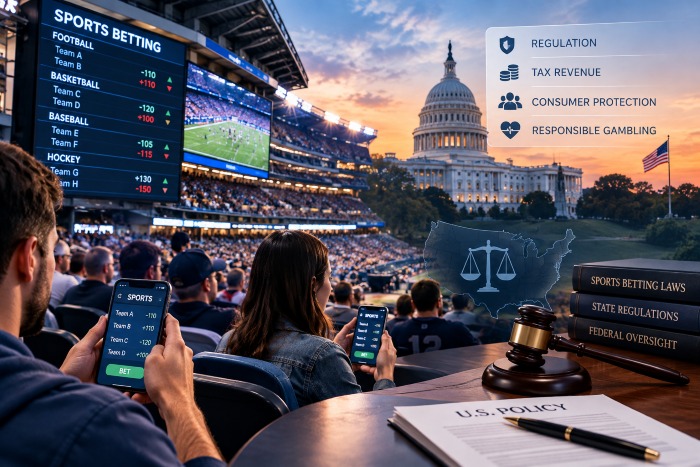
NewsPatrolling.com – 14/09/2026 :- Betting has long been part of American entertainment, from horse racing and casinos to lotteries and fantasy sports. However, the United States has experienced a major transformation in betting culture over the past decade, particularly with the rapid expansion of legal sports betting. What was once largely associated with casinos and a handful of states has increasingly become part of mainstream sports culture, supported by smartphones, digital platforms, advertising and the growing popularity of professional and college sports.
The most important turning point came in 2018, when the U.S. Supreme Court struck down the Professional and Amateur Sports Protection Act (PASPA), a federal law that had broadly restricted states from legalizing sports wagering. The decision in Murphy v. NCAA opened the door for individual states to determine whether and how they would authorize sports betting.
Since then, the American betting landscape has become increasingly diverse. Some states have embraced online and mobile wagering, while others have maintained strict restrictions or prohibited certain forms of sports betting. This state-by-state system has created a complicated regulatory environment in which the rules can change significantly depending on where a bettor lives.
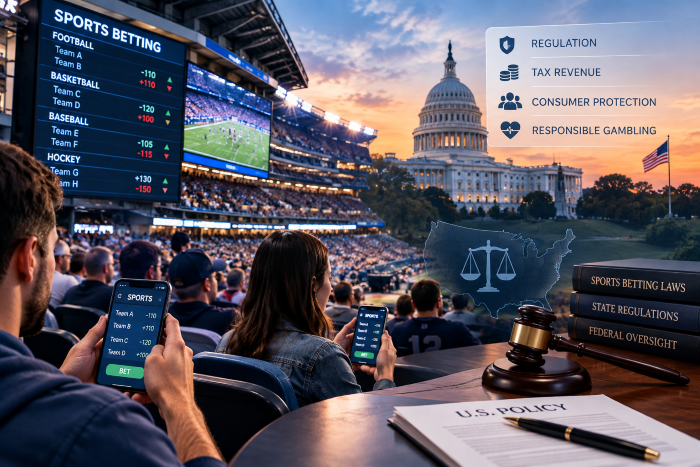
From Traditional Wagering to Digital Betting
For decades, betting in America was closely associated with horse racing, casinos, lotteries and the gambling industry in places such as Nevada. Sports fans could discuss games and predict winners, but legally placing a sports wager was unavailable in much of the country.
The growth of smartphones changed that environment dramatically. Once states began legalizing online sports betting, consumers could potentially place wagers through mobile applications without visiting a casino or sportsbook. Federal congressional research has noted that legal sports gambling expanded rapidly after the 2018 Supreme Court decision, with states adopting different approaches to age limits, permitted bets, online access and licensing.
Technology has therefore played a major role in changing betting culture. A person watching a football or basketball game can now follow odds, place a wager and receive updates through a smartphone. This has made betting more immediate and closely connected to the viewing experience.
Betting Becomes Part of Sports Culture
Sports betting is increasingly integrated into the broader sports entertainment ecosystem. Television coverage, online sports media, podcasts and social media frequently discuss betting lines, predictions and statistics.
For some fans, wagering is viewed as an additional form of entertainment. A small bet may make an otherwise ordinary game feel more engaging. Others are attracted by the analytical side of betting, using team statistics, player performance, injuries and historical results to make predictions.
However, the normalization of betting also creates concerns. When gambling becomes constantly visible through advertisements and digital platforms, the distinction between watching sports and participating in gambling can become less obvious, particularly for younger audiences.
This has led policymakers, sports organizations and consumer advocates to debate how betting should be advertised and how consumers should be protected.
Why Government Regulation Matters
The legalization of sports betting did not mean that the industry became unregulated. Instead, regulation largely shifted toward state governments.
Each state can establish its own framework for licensing operators, setting tax rates, determining legal betting products and establishing consumer protections. Some states permit widespread mobile wagering, while others impose more restrictions. Certain states also limit specific types of bets, including some wagers involving college teams or individual athletes.
This creates a patchwork of regulations across the country. A betting activity that is permitted in one state may be restricted or unavailable in another.
State regulators generally focus on several major areas: licensing, age verification, financial controls, responsible gambling measures, advertising standards, suspicious activity monitoring and the integrity of sporting events.
The Federal Government Still Has a Role
Although states have significant authority over sports betting, federal laws remain relevant. Federal legislation addresses areas such as gambling businesses, interstate communications, financial transactions and taxation.
The Wire Act is one of the federal laws frequently discussed in connection with sports wagering and interstate gambling activity. Federal authorities have also prosecuted illegal gambling operations, demonstrating that state legalization does not eliminate federal criminal laws applicable to unlawful gambling businesses.
Congress has also continued to debate whether national standards are needed. For example, the proposed SAFE Bet Act of 2025 sought to establish minimum federal standards for sports betting. The proposal illustrates continuing debate over whether a primarily state-based system provides sufficient consumer protection and consistency.
Other federal proposals have addressed specific concerns surrounding sports betting and athletes, demonstrating that regulation remains an evolving policy issue rather than a settled question.
Tax Revenue and Economic Impact
One of the strongest arguments in favor of legal betting is its potential economic contribution. Legal operators can be licensed and taxed, creating revenue for state governments. The industry can also generate employment and business opportunities for casinos, technology companies, media organizations and sports-related businesses.
However, tax revenue comes with an important policy responsibility. Governments must balance economic benefits against potential social costs associated with problem gambling, financial losses and excessive betting.
The federal government also treats gambling winnings as taxable income. The IRS states that gambling winnings—including sports betting winnings—must generally be reported as income. Certain winnings may also be subject to federal withholding and information reporting.
For 2026, the IRS has also changed the treatment of gambling losses, limiting the deduction to the lesser of 90% of gambling losses or gambling winnings for taxpayers who itemize.
These tax rules demonstrate that betting has implications beyond entertainment: it is also part of the financial and taxation system.
Responsible Gambling and Consumer Protection
Perhaps the most important challenge for policymakers is protecting people from gambling-related harm.
Legalization can make betting safer than underground markets because licensed operators can be subject to identity verification, age restrictions, monitoring requirements and regulatory oversight. At the same time, easy access through smartphones can make it possible for people to gamble more frequently.
Responsible gambling policies therefore have become increasingly important. Regulators and operators may use measures such as deposit limits, self-exclusion programs, spending controls, identity verification and warnings about gambling risks.
Consumer protection is particularly important when advertising encourages betting as an easy way to make money. Gambling, however, carries financial risk, and government policy must ensure that consumers are not misled about the probability of winning.
Young People and College Sports
The relationship between betting and young people is another major policy concern. College sports have an enormous following in the United States, but betting involving college athletes and competitions raises questions about integrity, athlete welfare and potential manipulation.
Sports organizations have therefore pushed for stronger safeguards. Congressional testimony from the NFL, for example, has emphasized age restrictions, regulatory oversight and protections for the integrity of sporting events.
The growth of betting on individual player performances has added another layer of concern. Athletes can potentially face pressure or harassment when a specific statistical outcome affects a wager. This makes integrity monitoring and athlete protection important components of modern betting regulation.
The Debate Over Advertising
Advertising is another area attracting increasing attention. Sports betting companies have become highly visible around sporting events, online broadcasts and social media.
Supporters argue that advertising helps legal operators compete and informs consumers about regulated options. Critics worry that excessive promotion can normalize gambling and encourage frequent betting.
This debate has prompted proposals in Congress concerning sports betting advertising, demonstrating that lawmakers are considering whether additional federal standards may be necessary.
The central policy question is how to permit a legal entertainment industry while preventing advertising from becoming aggressive, misleading or excessively targeted toward vulnerable groups.
The Future of Betting Culture in America
The future of betting in the United States will likely be shaped by three forces: technology, consumer demand and regulation.
Technology will continue to make betting more accessible and data-driven. At the same time, regulators will face pressure to develop stronger safeguards against fraud, illegal wagering, money laundering and problem gambling.
The debate over federal versus state authority is also likely to continue. The post-2018 system gave states significant freedom to develop their own markets, but the differences between state laws have created calls for national standards.
The challenge for policymakers is therefore not simply deciding whether betting should be legal. The more complicated question is how betting should be regulated in a way that protects consumers while allowing legitimate businesses and governments to benefit from a legal market.
Conclusion
Betting culture in the United States has changed dramatically from the days when sports wagering was concentrated in a few locations. The 2018 Supreme Court decision transformed the legal landscape, allowing states to make their own decisions about sports betting. Since then, technology, smartphones and sports media have helped move betting closer to the mainstream of American entertainment.
Yet legalization brings responsibilities. Government policy must address consumer protection, taxation, advertising, age restrictions, athlete welfare, sporting integrity and problem gambling.
The American experience shows that legalization is only the beginning of the policy debate. As betting becomes increasingly integrated with sports and digital technology, the future of the industry will depend on finding a careful balance between economic opportunity, entertainment and public protection.